Skip to content

Category Archives: art

Your guitar plays great songs!

There’s a meme I keep seeing on Twitter to the effect of, “Telling a photographer their camera ‘takes good pictures’ is like telling a cook their oven bakes good cake.”
I will tell you, I got my back up a little about this. Sometimes your ability to do good work is truly limited by the quality of the tool of production.

I don’t know if a good cook could produce great work in my Sophomore year oven. Honestly, to this day I’m not conclusively sure the thing heated up past 200 degrees.

In my contrary angst I clicked through the meme to a delightful blog post from photographer Erin Farrell, who maybe was the patient zero of this wave of strident photogs? Erin put “takes good pictures” to the test – handing her pro camera to her amateur brother to shoot a friend’s daughter, and then shooting that same girl in the same location herself.

The results? You have to read her post to see, but the essence is that even her brother’s best shot with a heavy-hand of pro touch-up doesn’t compete with her middling shots directly out of camera.
Touché, Erin.

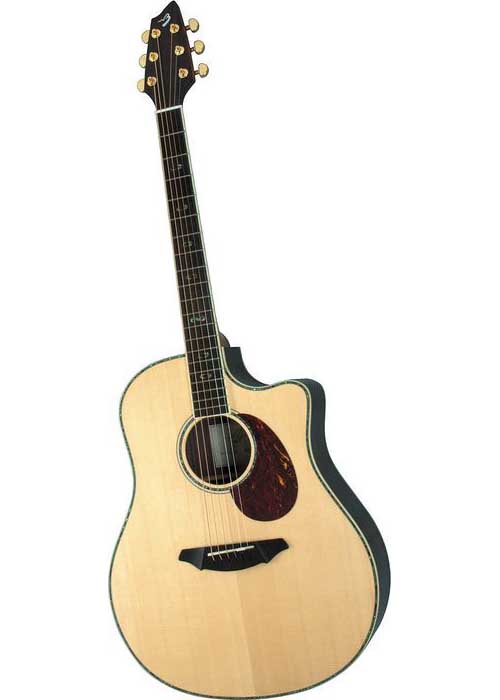
Then I thought about guitars. What if someone stopped me after a show and said, “your guitar plays great songs!”

I think that phrase is more illustrative of the photographer’s dilemma than the camera example, because the divisions are clearer. A guitar isn’t as smart as a camera – it has no automatic mode; it can’t focus on faces. As the songwriter, I’m the one who dreamed up the melody, wrote down the words, and decided on the arrangement and dynamics.

The guitar can’t do any of that for me. Like the photographer, it results from my skill and years of experience.

What the guitar did was give it tone. Depth. Credibility. If your favorite guitar player played your favorite song on a crappy guitar it would still be your favorite song, but it wouldn’t ring as true as their original. I am not a huge guitar snob, nor am I the best guitar player, but I categorically won’t play on other people’s guitars – my guitar is as much a part of my sound as my voice.

If an aspiring songwriter told me “your guitar plays great songs” (and they have, more or less, because I love to let other people play my guitar), I would thank them and tell them about Breedloves and why I like playing them. Because, even if my songs might be better than their song at the moment, the better tool is going to help level the playing field – and help them improve.

In short, the nicer guitar will play great songs.

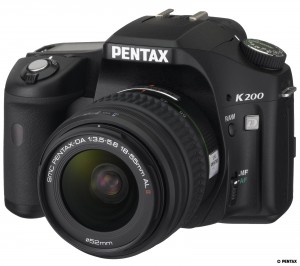
That, in turn, made me think about cameras again. E is a degreed photographer, and I love her prosumer Pentax digital camera. In Paris she frequently let me shoot with it even though I also had a low-end “point and click” camera to shoot with.

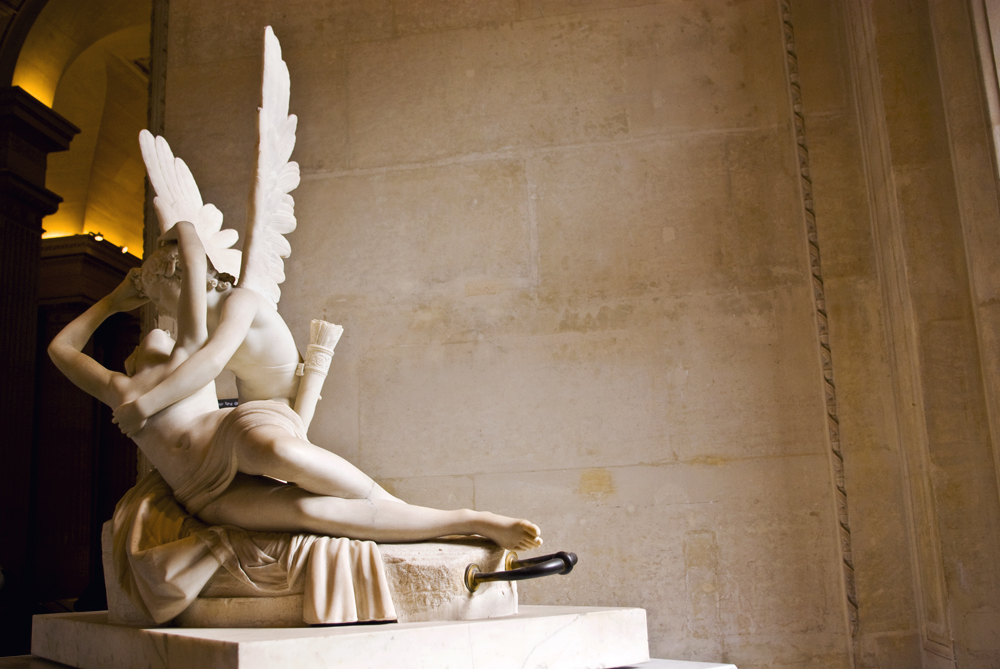
Below are two photos of one of my favorite works of art, Cupid and Psyche, which lives in the Louvre. Both were taken by me with no coaching from E, though with different cameras on different days and with different light. Both are the best shot I took out of many with each of their respective camera, based on the limits thereof.

Which camera took the “great” picture? Click through for full size.
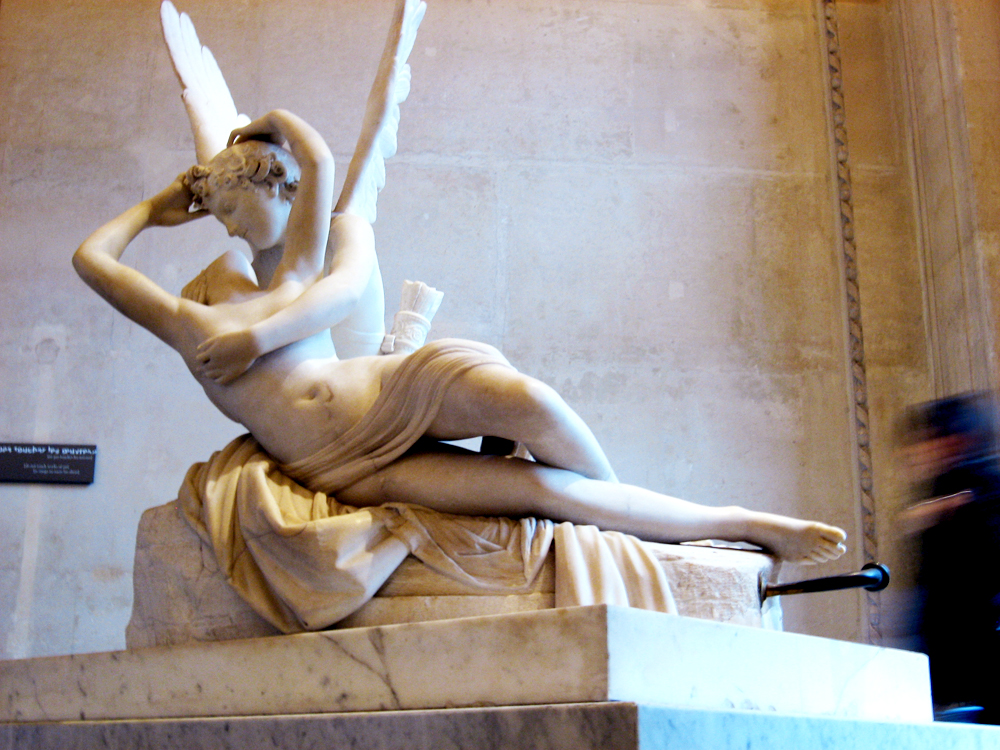

Bottom line? Some cameras take great pictures, and some guitars play great songs – but they need a certain alchemy from the taker and the player to do their magic.
But I Regress, pt. 1

With the launch of my monster definitive guide to collecting X-Men comic books as graphic novels, I have officially become a fifteen year-old.

Allow me to explain. Or, to begin to, as I’m sure this is a multiple-post-spanning story (just as that website feature was a multiple-month spanning obsession to research).

A few months ago Philly-local social media mover/shaker/sandwich-connoisseur @MikeyIl threw a series of events for the Ford #FiestaMovement. One of them was an all-local art show, featuring work by my partner-in-fame Britt Miller, as well as Eddidit and others.

Being Britt’s unpaid intern / personal assistant / life coach and a faithful supporter of friends and local artists, I got my ass there – even though the event was smack in the middle of negotiating the price of our house with our Realtor over the phone.

(Literally. Drunk friends: “What are you doing?” Me, to phone: “Hold on a second.” Me, to friends: “Oh, I just got another few thousand dollars knocked off the price of our house.” Drunk friends: “Wowwww.”)

Where was that fateful art show held?

Brave New Worlds. A comic book shop.

Here at Crushing Krisis I haven’t ever fully explained my addiction to comic books, c. 11/1991 – 4/1996.

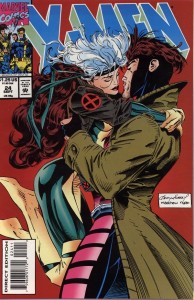
X-Men #24, one of my favorite comic covers.

It was a brief but tumultuous affair. Comic books combine my love of serial narrative with an OCD urge to make meticulous, alphabetical lists. They created a 10-year-old who would do anything to earn $40 a month to pick up every book bearing the image of Wonder Woman or an X-Man.

(Seriously, I’m surprised I wasn’t peddling coke for my neighbor. It’s a good thing my guitar habit didn’t get to drug-running levels of expense until after college, when I was salaried.)

For only collecting for four-and-a-half years, my comic collection is prodigious. Not only did I collect new issues weekly, but in the pre-spreadsheet days the adolescent OCD Godzilla in my soul – a mere tadpole, at the time – compiled lists of back issues by hand… lists twenty and thirty pages long, complete with estimated budgets and timelines for purchase. Every few months my father engaged my whim, and I checked off line after line.

I was hardcore. The guys at the comic store treated me like I was twice my age (now ironic) because I was so on top of my shit with my pull lists and my back issue pricing and my discussions of the Magneto’s morality and if the ends truly justified the means.

Then came the internet. AOL dial-up cost by the hour, and I was hooked on it within minutes of my first sign-in in January of 1996. Four months later my wallet issued an ultimatum: limit my internet usage, or jettison my comic addiction – now complicated by Marvel’s 90s’ decadence of holographic covers and limited series.

The real decider was probably a demo of Warcraft II, a living digital board of Risk I could play over and over again with my friends over my 14.4 baud modem.

I dropped the comics and never looked back.

Until last month.

(To be continued! In the meantime, if you’re a closet x-fan who wouldn’t know a pull list from their elbow, check out definitive guide to collecting X-Men comic books as graphic novels – the easiest (and cheapest) way to be an adult comic book fan.)

Helping you picture books

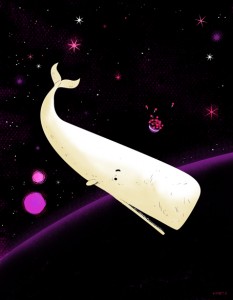
The Whale - Illustrated by John Martz

Picture Book Report posts original illustrations of passages from familiar novels. Each artist/blogger chooses a favorite tome to visualize.

These two beautiful images from the illustrations for The Hitchhikers’ Guide to the Galaxy (rendered by John Martz of drawn.ca) are what originally caught my eye, and if you are a Hitchhikers’ fan you’ll immediately know the passages they correspond to.

The Babel Fish - Illustrated by John Martz

Some of my other favorite images have been the illustrations of The Hobbit, Alice’s Adventures in Wonderland, and Tarzan of the Apes but not everything is genre fare – see One Flew Over the Cuckoo’s Nest or the Grimm tale The Bremen Town Musicians.

Awesome blog concept, beautiful illustrations, and possibly a leisurely-paced book club – assuming you can read faster than the artist on each book can draw.

(found via more(ish) : meg’s scrapbook)

not-so-prompt prompts

In my Google Reader I have a tag called “PROMPT” that I affix to posts that made me think or feel something that I might like to share on CK.

I’ve discovered that prompts are best served fresh – ideally I should be writing a post about that intangible thought or feeling within a day or two of having it.

There are presently prompts on my list from as long ago as September. That is scary. It is sitting in the way of me being prompted to tell you about new thoughts or feelings. I need to flush out all my prior prompts so I can post about prompts promptly when they prompt me.

Let me see if I can string some together in a way that makes sense to us both.

.

Spezify is a visual search engine, but that doesn’t mean what you probably think it means. Spezify searches the web for text, photos, and social media mentions of your search term, and arrays the results in a collage on your screen. It’s a great way to catch a quick snapshot of a person, place, musical artist, or brand. See what it has to say show and tell about crushing krisis or Philadelphia. Link via Fresh Arrival.

.

The imitable Maggie of Mighty Girl posted about her husband’s project, Typekit. Typekit seems to still be in a closed alpha, but the gist of it is that it allows you to dynamically embed text in any font onto any webpage, regardless of if you (or the end user) has that font. You can follow the development on the Typekit blog.

In my humble opinion, Mighty Girl continues to be one of the definitive personal blogs on the internet.

.

Geekadelphia (an excellent blog) recently posted a mammoth interview with J. C. Hutchins. Hutchins parlayed the net-success of his podcasted 7th Son trilogy into a publishing deal and subsequent tangible book. Said book – Personal Effects: Dark Art – comes complete with an intricately crafted alternate-reality game component that expands the narrative far past the boundaries of the book. Probably the next piece of fiction I will read, and setting the bar high for the next evolution of the novel.

(PS: M. Hutchins dropped by to comment less than twenty minutes after this was posted. Nice to see his publishing deal hasn’t changed his net savvy :)

.

Matthew Sheret (who I found via Warren Ellis) is a writer and photographer with an intriguing list of projects. I am fascinated by his recent post This is a Souvenir, in which he details writing songs for an imaginary band, and how he’d like to take it a step further and have an imaginary record label.

I love that sort of thing – a simulacrum of the footprint left by actual media, but in the absence of said media.

(Speaking of Ellis, I enjoyed his dissection of what it means to be a “digital magazine,” and how that ought to be different from a bells and whistles flash interface with whosits and whatsists. His point (and mine)? You can change the method of delivery, but “magazine” should still mean “magazine.” But, can “newspaper” still mean “newspaper”? Compare to a recent Conversation Agent post about what happens when your local paper goes entirely online.)

.

Lane is a remarkable photographer I have been a fan of for a long time. Today she posted an unreal photo of a rainbow seen over the New Mexico desert. Recently she volunteered with Review Sante Fe, a local photography exhibition. She posted a sampling of RSF photographers, and their work was uniformly amazing.

Now that Lane is back in the US I need to buy a print from her.

.

I saw what was perhaps my first double rainbow ever a few Saturdays ago on the way to E’s show at The Saint in Asbury Park. It was so close it seemed like we could drive right to the end of it.

Classic Modern Classics

There is a wonderful meme sweeping the illustrators of blogland wherein they render an antiqued paperback cover for a modern classic.

I first caught this meme earlier in the month from the blog of author Martha Wells, who pointed to these clever Harry Potter covers, in the style of classic Penguin books. The same artist – M. S. Corley – also took a shot at Lemony Snicket and Spiderwick. I recommend spending a few minutes with Corley’s blog during which you scroll down to some of his prior work, much of which is fascinating.

However, that one blog didn’t push my to my posting tipping point – I needed a reminder. Earlier today I caught a link from Neil Gaiman for illustrator Mike Baker‘s entry for a classic Coraline.

Apparently Baker caught the bug from Spacesick, who rendered covers for cult cinema classics like Back to the Future and Highlander. Some of them are particularly excellent – I might print a set and wallpaper my cube.

Finally, Storyteller’s Workshop offers a primer on how to achieve the effect on your own.

If you have seen this meme elsewhere on the web please point me towards the art so I can update this post or pen a sequel.

how the Musee d’Orsay is like an unexpected vagina, and other adventures

I know I’m still down about three Louvre posts as well as the Eiffel and Latin quarter, but if I don’t keep up with the new stuff none of it will ever get written.

So, today.

After our amazing day yesterday, which ended in giggles and me seeing how much crepe I could fit into my mouth at one time, Elise and I concur that today has been our one crappy day of the honeymoon thus far.

We woke up early and I made the best scrambled eggs ever made, with gouda, brie, chevre, and maybe manchego? It was really cheese with eggs as connective tissue. Best ever.

Afterwards, perhaps as a result of the 3000% increase in my dairy intake over the last few days, I fell back into a deep slumber from which I could not be roused. Even after I was finally dragged back out of bed at noon I was in a complete haze, and kept drifting off on the couch while Elise counted out our coins for the ticket machine. My grump had mostly lifted by the time we were off the Metro, but I was still sluggish.

Today’s big adventure was Musee d’Orsay, which is the modern art museum. With apologies to my sister-in-law and our dear friend Francesca, d’Orsay blew. In a word, Elise describes it as “ungratifying.”

Rather than a word, I choose to describe it in an illustrative allegory:

In the ground floor gallery I was looking from one room into the next, and I thought I spotted a Munch. It was pretty far away, but it was in the general shape of a Munch I recalled.

I approached the gallery, and as I neared the painting it became apparent it was not the Munch in question, but a massive, close study of a disembodied vagina.

That captures my feelings on Musee d’Orsay exactly: not the thing you thought it was, but actually some other thing, which in other settings is an awesome thing, but in this instance not awesome in the manner in which it is presented.

Musee d'Orsay

The main sculpture hall is magnificent to look at from afar, but the actual rooms were claustrophobic, especially on the fifth level. I realized as we jostled our way through (and on a Saturday – without any groups!) how much I really appreciated that Louvre had seating in every gallery.

Also, the collections were simply overwhelming – like, not in the sense of “the Louvre is so large; it’s overwhelming,” but in the sense of, “there is too much Degas in this room to focus on any one of them; it’s overwhelming.”

D’orsay features a lot of impressionism, including pre- and post-, and it’s not really my favorite period. There’s only so many times I can appreciate that something looks like its subject in a subjective way before it all just comes off like a torturous, never-ending labyrinth of Magic Eye (which is not meant as a dig on pointillism, which I actually do appreciate).

I was excited for Room 60, which included a Munch and a Klimt, who are two of my top artists in general, and especially from this period. All through the impressionists I was like, “it’s okay, I’m going to get to see a Munch, it will be so cool.” Lo, we arrived in 60 to find that neither painting was on display. (Thus, the vagina incident is revealed to be even more painful.)

Also, the major special exhibit at the moment is basically just about how Picasso was a twisted psychotic and spent two years copying Manet’s Le déjeuner sur l’herbe over and over again in increasingly abstract ways until he was literally creating cardboard cutouts of the deconstructed characters.

There were a few high points.

The Pedicure (Degas) Even though the volume of Degas was tiring, I enjoyed watching the evolution of his work. I was endlessly fascinated by The Pedicure, because it has a very specific, photographic depth of field. It’s quite fascinating – Elise and I had a lengthy discussion about how he might have conceived of the technique, as it’s not something easily observed with the naked eye.

I’m sure Jenny can explain it to us.

I also loved the dance class, which has a similar specific focus along the shoulders of the girls (plus, the tutus are incredible).

I also delighted in my discoveries of Gustave Caillebotte, and I say “discoveries” because three times I found paintings that I loved and subsequently realized they were by him.

Les raboteurs de parquet (picniked)

I’ll definitely be buying a book as soon as we can find one (D’orsay puzzlingly, had nothing to speak of, even though they have two of his major works on display).

Vue toits, effet de neige (picniked)

The upper restaurant was fantastic, and may merit its own post. There was also an appropriately-sized section of beautiful art nouveau furnishings that I would have killed to have Francesca guide me through.

Finally, there was one room of “symbolism,” a period/style that neither of us were especially familiar with. From what I could discern on a brief pass it’s an allegorical style that casts modern situations with clear historic or mythological analogues. I loved the entire room, but my favorite was a painting that claimed to be about some sort of pastoral school yard, but that I have retitled, (and all the apostles sang) Rock Me, Sexy Jesus, for obvious reasons. Behold:

(and all the apostles sang) Rock Me, Sexy Jesus

(I implore you to click through for a closer look. The allegorical only begotten son homoeroticism is unparalleled.)

Okay, one last point of suckitude: d’Orsay claims to be open until six, but shortly before five thirty they rope off many of the individual exhibits and start shooing you towards the exits.

Like I said, it blew. I’m thankful for being introduced to Caillebotte and symbolism, but otherwise would have preferred a second day in Louvre.

Afterwards we walked along the river for a bit, terminating in my ideal shot of Eiffel (it’s on Elise’s camera, so you’ll have to wait), and then we detoured past Grand & Petit Palais (which will have Warhol from March to Bastille) to get to Champs-Élysées.

Champs-Élysées was a bit of a paradox. We were expecting faire du shopping to net some of the wonderful fashions we’ve been encountering on the Metro all week. However, despite a few browses in both French and international stores, we didn’t settle on anything. I felt like we kept seeing the designer versions of indie trends, which I suppose is entirely the point of Champs-Élysées? I’m certainly happy to have walked the street, especially since I finally got to see Arc de Triomphe up close, and it was definitely a sight to be seen. I just thought I’d buy more stuff.

By the end Elise was barely standing, and we rode an assortment of Metros to get back home.

Maybe we were just predisposed to grumpiness, but today just didn’t bring the awesome of yesterday, despite a similar slate of activities. I hold out hope that we’re heading back out for a late night jaunt to the Moulin Rouge, but Elise may be down for the count – and she has all of our money.

Le Louvre embrace les bandes dessinees et leur auteurs

The two exhibitions we’ve enjoyed the most both just opened this week – what luck on our part! Both played to our specific interests, which made them even more fascinating.

Today’s at Jeu de Paume was a phenomenal Robert Frank photography exhibit that perhaps I can get Elise to write up for you, as she would do it better justice than I could.

Yesterday’s deserves its own post not only for the conversation it inspired between the two of us, but also because it’s newsworthy – it just had just opened that morning!

Louvre initiated a groundbreaking partnership with a collection of famed French creators of bandes dessinees – comic books, though in this instance it refers to graphic novels – for the new exhibition Le Louvre invite la bande dessinée.

Just the idea of the exhibit is groundbreaking. Louvre is a classical institution, and it has heretofore neglected to recognize bandes dessinees as fine art worthy of mention. Yet, it isn’t just its inclusion that broke ground, but it’s execution. The exhibition is not just a static display of the work of famous comic artists. Instead, Louvre engaged a panel of artists to write and illustrate a series graphic novels set in Louvre, each centering on one of its specific works.

The result was a set of imaginative, fantastical, diverse graphic novels by authors Nicolas de Crécy, Marc-Antoine Mathieu, Éric Liberge and Bernard Yslaire – each with their own style and identity.

The exhibit features bios of each artist in French, English, and Japanese alongside of original plates of their work. Additionally, a series of video screens display the steps of digital illustration that went in to some of the books (said Elise: “Oh my god, Lindsay would love this.”).

One of our favorite genres of art in Louvre was paintings of the halls of the Louvre, because their artists had to painstakingly reproduce other artists’ works as seen at oblique angles and lighting conditions. The graphic novels do just that … arbitrarily, and on each page, all while imagining a narrative playing against that classical backdrop.

While many of the novels predictably featured the Mona Lisa, we were drawn in specific to Eric Liberge’s Odd Hours – partially because it is about Nike of Samothrace deciding to fly away from her moorings, but mostly because his illustrations are stunning. The plate of Liberge’s work literally stopped us in our tracks, which only a few other pieces in the entire museum managed to do.

This was a temporary exhibition, so we were prohibited from taking photos – and the comics are so new that I can’t even find any images online! I’ll try to shoot a page of Liberge’s stunning book to show you, as there’s no way I will be smooshing it onto my scanner at home.

Louvre, pt. 1: Getting There

Today brought our first proper excursion, and perhaps our most daunting: Le Louvre.

We managed to wake up prior to nine (local), although for me this involved a few hours of a.m. restlessness. We ate a brief breakfast from our assembled groceries (Elise, cereal. Me, fresh bread with strawberry preserves and six month gouda), and bundled heavily against the dreary weather that will be following us for the remainder of our trip.

The jaunt to Louvre involved our first interaction with the Paris Metro. We had already scoped out our three neighborhood stops, all on the 11 line, which we could take almost all the way to the Louvre. To give you a sense of the scope, the statistic goes that every building in the city is within 400 metres of a Metro stop.

The Paris underground feels roughly equivalent to New York, though I don’t find it nearly as overwhelming as NYC (or London, from our brief excursion). For Philly folks, in practice it felt like a triple-sized version of SEPTA’s Regional Rails, especially because each stop has its own name and specific identity. You can form your own opinion by playing with RAPT’s fascinating interactive map.

Despite studying the site in French and English prior to our departure we were absolutely stymied by their ticket machines – and they actually speak English! They wouldn’t take our American credit cards or any bills, which severely limited our purchase options. We settled for one-way tickets, as that was all we afford without hunting down a change machine (I though I had found one, but it was actually a condom dispenser, which are ubiquitous in the Metro stations).

Print nerd alert: Stations are plastered with huge advertisements in three primary sizes – the oversized European movie posters, long station cards that are effectively mini-billboards, and massive square sheets (4 metres square?) mounted on the curved walls of the platforms. Not only are all of them bigger than what I’m used to, but they conform to a much higher design standard – especially the super-sized ones. There was more pedestrian graphic design to be seen on the actual trains, but I think the larger pieces must go through an approve process on the RAPT side of things, because they were universally pretty impressive.

(I wasn’t keen on whipping out my camera at the local stop, but I’ll endeavor to snap some photos at some point before we depart.)

The trains themselves are petite compared to Philly or NYC subways – head on they give the appearance of being a sort of trolley. The interiors of the ones we rode were universally marked in graffiti, as is much of the north side of the city. Seats are relatively tiny compared to the El, maybe owing to the specific lack of obese people here (more on that later). Curiously, the seats adjacent to the doors snap down to be used when volume is lighter, but passengers are expected to abandon them when its crowded. Amazingly, people actually did this with regularity – even younger, punkish kids.

We passed a fascinating stop – Arts et Metiers – that was sans advertisements, and was dressed rather like a Jules Vern submarine. We’ll have to investigate that more at length on our next jaunt. Our line terminated at Chatelet, where we wandered through a maze of catacomb-like tunnels – passing a phenomenal classical guitarist and a full-scale acoustic band with an upright bass and accordion singing standards in four-part harmony.

The maze was well labeled (way better than the mess at Philly City Hall, which is shamed by comparison), and without much consternation we boarded another train, which deposited us just outside the outer walls of the Louvre.

With that I think I’ll break for a hunk of cheese, and maybe to swipe a few photos out of our 300+ to illustrate the next few posts.

Sound and Vision

On Friday night I attended the New Artists opening at Muse Gallery, a third of which was the art of one my increasingly close friends, Jennifer Vessels.

I was one of the first guests to arrive, and I got to experience the art of all three of the new members in a nearly empty room to the hypnotic sound of Dante on his hang drum. I had seen some of Jennifer’s work before, but smaller, and as prints – never up close, original, and with all of the beautiful texture that each of her collagraphs contain.

Each piece was labeled with title and price, and though I understand that the intent of the show is not necessarily to sell the pieces, the concept of selling a piece of physical artwork is so strange to me. I could sell one of my songs, but I would always be able to play it. Elise could sell a photograph, but it would just be a print – a single version of an original negative.

I marveled at that, lost in the detail of her lines and colors on a second walk through the gallery. How to be Jennifer, so entangled in music and light that she can contain them both on a canvas, yet able to part with a piece, never to see its texture again.