 Near Mint Condition announced another Marvel omnibus for April 2027, and it was book that left me cheering out loud… until I got into the details of how it will be collected. That doesn’t mean it sucks: the community is divided on how this material ought to be handled. So, let’s dig into the pros and the cons of the newest Marvel Omnibus Announcement: Marvel Comics Presents Omnibus Vol. 1.
What is Marvel Comics Presents? It was a long-running anthology title launched in 1988 that took an unusual approach – and that approach is what is causing controversy with omnibus collections.
Marvel’s existing Anthology title, Marvel Fanfare (1982), was a Direct Market title with high production values that featured an A-Story by major industry stars, and often a slightly more obscure B-Story. Some stories ran for 2-3 issues, but others were one-shots. Marvel also launched Solo Avengers (1987), which similarly featured a team-up A-Story (usually anchored by Hawkeye) with a shorter B-Story.
I’d say that was a relatively standard approach for both Marvel and DC to this point. We’d have to look back to Silver Age DC Comics to find anthology titles that regularly ran three or more serialized stories each month. That was not Marvel’s way of doing things from the Silver Age onward except for in their 70s magazines (like Vampire Tales (1973)).
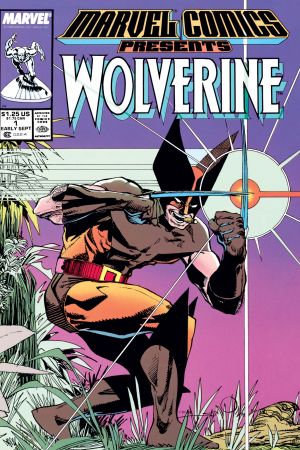
Marvel Comics Presents (1988) [“MCP” for short] saw Marvel taking the DC Silver Age approach turned up to 11. It was a bi-weekly comic series with each issue featuring four eight-page stories. Each issue was usually fronted by a major mutant (often Wolverine) or Avenger, but the following three stories sometimes featured characters that could be much more obscure. And, most of those stories were multi-part series – with Black Panther kicking off with a 25-part story during the first year.
Of course, when you’re releasing 26 issues a year, a 25-part story isn’t so wild. It was basically a 10-issue series serialized across the entire year. Similar, many Wolverine stories ran from three to ten installments, meaning they were anywhere from a one-shot story to a four issue mini-series.
(Another fun element: every issue had a table of contents page with recaps of each story!)
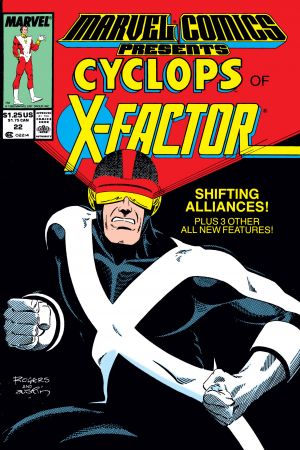
We’ve seen many of these stories collected in the omnibus lines of their characters. Wolverine and Ghost Rider, the most frequent A-story stars, are collected completely in their omnibus lines. Black Panther’s initial saga makes up a huge part of his Black Panther: Revenge of the Black Panther Omnibus. A long-running Cyclops serial has been collected in the X-Men line. Minor stories of characters like Silver Surfer
 We could keep running through the list and picking out examples of stories that have been collected elsewhere.
However, those were mostly the A-Stories and B-Stories. Stories about characters like Stingray, Comet Man(?), Le Peregrine(??), and Coldblood(???) don’t have another home. And, even some big characters like Thor and Fantastic Four don’t have omnibus lines that stretch far enough to capture this material quite yet.
(And, for the stories that haven’t been collected elsewhere, that means they aren’t on Marvel Unlimited – which sometimes has only partial issues of this series!)
For all of those reasons, getting a complete Marvel Comics Presents (1988) omnibus is a very exciting prospect!
Now we come to the problems.
First, this book is just too small. It is only announced to collect issues #1-25.
This is not the controversial problem. Twenty-five issues is a lovely round number for a series that is 175 issues long… but it adds up to seven omnibuses. Each issue contained 4 x 8pgs of story plus 1-2 covers (sometimes it was a flip book or wraparound) and a 1-2 TOC pages (2 wasn’t until later in the run). That means 1 issue is 34-36 pages of content, 25 issues is 850 – 900 pages, and the entire series is 5,950 – 6,300 pages.
That should be no more than six omnibuses for a niche book of inconsistent material like this one. Honestly, it could be done in five – even at the maximum length, that would be 1,230 page books, which is near the size of volumes in both the X-Men: Blue & Gold line and the Ghost Rider: Danny Ketch line.
Yet, we could have predicted this from the Marvel Fanfare omnibus line – which took three volumes to collect what could have easily fit into two. For a lower-selling book that involves a fair amount of restoration, smaller volumes at a not-small price point are becoming standard for Marvel.
However, there’s another problem that is causing dissent with fans. And that is how this book is collecting the issues and stories. Per the Near Mint Condition announcement video, this is going to collect complete issues in order as they were released.
In fact, that means you’ll have to read each story in a one-by-one serialized format, paging through the book if you want to continue following it without reading the other serialized stories between installments. If Part 1 is in #1 and Part 2 in #2, you’ll have to flip 30+ pages forward to keep reading.
Not only that, but Marvel is sticking with collecting only full issues.
Think about that for a moment. Issue #25 contains stories starring Havok (2 of 8), Black Panther (13 of 25), plus two one-shots (Nth Man & Ursa Major). Issue #50 contains stories starring Wolverine (3 of 3!), Comet Man (1 of 4), plus two one-shots (Captain Ultra & Silver Surfer). Issue #75 contains Part 3 of the iconic “Weapon X” by Barry Windsor Smith… so that GOAT-level story will be split across two omnibuses.
Maybe that’s good marketing? Maybe it’s Marvel’s insurance policy to get people buying multiple books in this line. But, it’s also a crappy reading experience – both in terms of juggling multiple omnibuses to complete what is effectively a one to 10 issue story, and also in terms of us waiting at least six months (if not more) between books.
(One way it does make sense – we’ll be able to have all of the original table of content pages, since they’ll run each issue in full!)
DC handled this much more elegantly in their recent Batman: Urban Legends Omnibus Vol. 1, a book collecting a similar 4-story anthology comic. In that book, each story is collected in full – with later issues filling in one-shot tales to round out the book’s length, but saving their longer serialized stories to anchor Vol. 2.
Alas, with this announcement the ship has sailed on both the length of these books and their collection format. Either you like it or you don’t. But, because each book will trail off mid-story, if you are buying this first book you’re essentially signing up for seven volumes across the next 4-7yrs.
Good luck and god speed with that decision. I own these singles in full and I am not sure which way I’ll go.
That Cyclops serial (a HUGE favorite of mine because of the return of Banshee) was reprinted in the second X-Factor Omnibus. I passed on that omni because I would be majorly double dipping but I may pick this omni up because of it. I do have fond memories of the Man-Thing and Shang Chi serials. And perhaps this will drum up interest in a Nth Man Omnibus since his first appearance was in #25. (I know, I know… doubtful but I have hope!)
More than likely nostalgia will get me for the next volume too because I would love to see Paul Gulacy’s Coldblood in an over-sized volume. And I have a strange love for the Thin Man appearance too which led to one of my favorite underrated books the New Invaders.
There are SO MANY stories in here I am hype for, but I am really struggling with if I would ever pick these volumes up to read them.