Updated Sept 29 2025! The definitive, chronological, and up-to-date guide on collecting Avengers comic books from 1963 to 1996, including Avengers (1963) #1-402 as written by Stan Lee, Roy Thomas, Roger Stern, John Byrne, Bob Harras, and more via omnibuses, hardcovers, and trade paperback graphic novels. A part of Crushing Comics – Guide to Marvel Comics. Last updated September 2025 with titles scheduled for release through June 2026.

The Fantastic Four were Marvel’s “first family” and The Avengers were its first super-group.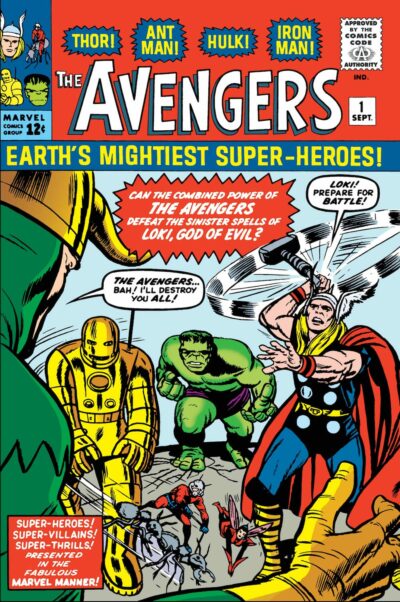
In its 1963 debut, Avengers pulled together all but one of Marvel’s most-successful early Silver Age heroes from their disparate anthology titles – Iron Man, Thor, Hulk, and Ant-Man & Wasp. (The hero they omitted was Spider-Man.)
After just four issues the line-up was tweaked to drop Hulk and add Captain America, unfrozen after the Golden Age in a sly bit of retconning from Stan Lee & Jack Kirby, and the Avengers as we know and love them were born.
The Silver Age run of the book established many of the relationships we take for granted in modern day Marvel. Issue #16 found Cap leading the new “kooky quartet” of former villains Hawkeye, Scarlet Witch, and Quicksilver. A few years later the team would add characters like Black Widow and Black Panther to the cast and head into the famous storylines that debuted Vision and Ultron.
That original 1963 Avengers title lasted for 33 years until it was cancelled in the wake of the 1996 Onslaught crossover event. By the time the book ended it had seen dozens of heroes become members, eventually graduating from being anchored by its “holy trinity” of Iron Man, Thor, & Cap to feature a broad array of cast members like Carol Danvers as Ms. Marvel, Starfox, She-Hulk, Hercules, Crystal, Sersi, and more!
This guide addresses how read and collect every issue of this main Avengers title. If you’re looking for other Avengers titles from the same period, they have their own guides – including a Guide to Avengers West Coast. And, if you want to continue reading Avengers from this point forward, simply move on to the Guide to Avengers (1996 – 2005).
There are hundreds of different collections of this era of this initial thirty-year run of The Avengers. However, there are a few specific formats of books that cover large portions of this title, and I’ll cover those first – oversize Omnibuses, premium hardcover Masterworks, affordable digest Mighty Marvel Masterworks, chunky paperback Epic Collections, and the classic black-and-white Essentials.
Then, I’ll get into the issue-by-issue chronological breakdown of the 400+ issues of this title across the Silver, Bronze. and Copper AKA Modern Age – including where the run was intersected by major stories like Secret Wars, Inferno, Infinity Gauntlet, and Onslaught.
Note: This guide is focused on collections that will allow you to collect a continuous run or key stories from The Avengers. This guide does not contain every collection that includes just a handful of issues of Avengers. For example, a modern Doctor Doom collection containing two issues of Avengers would be omitted.
 Before The Man Who Sold The World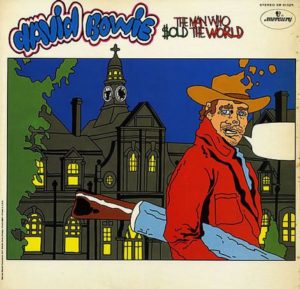
 Early demos of “Space Oddity” from spring of 1969 show it had all the fine skeletal structure that makes it an arresting performance even today – the countdown, the layered “ground control” vocals, the drifting out in a tin can, and the extended break. A notable early demo features a live duo performance with Bowie handling the countdown himself. Yet, this tune was admittedly another curio – a gimmick song coinciding with increasing attention on the space race. Just as Bowie’s debut album couldn’t be shaped entirely around the theme of a giddy gnome, “Space Oddity” couldn’t set the theme for the rest of its record alone.
 “Space Oddity” is a singularly peculiar song. Everything about it is peculiar, from it’s slow fade up and wheezing stylophone, to its measured countdown leading to liftoff, to it’s insistent lack of choruses. David Bowie told many fantastical stories in the songs of his debut LP with Deram, but none so dramatic or immediate as this one. It’s the little touches that make it memorable, like the love to his wife and the oscillating flutes behind the “sitting in a tin can refrain.”
