• Skip to primary navigation
  • Skip to main content
  • Skip to primary sidebar

Crushing Krisis

Comic Books, Drag Race, & Life in New Zealand

  • DC Guides
    • DC Events
    • DC New 52
    • DC Rebirth
    • Batman Guide
    • The Sandman Universe
  • Marvel Guides
    • Marvel Events
    • Captain America Guide
    • Iron Man Guide
    • Spider-Man Guide (1963-2018)
    • Spider-Man Guide (2018-Present)
    • Thor Guide
    • X-Men Reading Order
  • Indie & Licensed Comics
    • Spawn
    • Star Wars Guide
      • Expanded Universe Comics (2015 – present)
      • Legends Comics (1977 – 2014)
    • Valiant Guides
  • Drag
    • Canada’s Drag Race
    • Drag Race Belgique
    • Drag Race Down Under
    • Drag Race Sverige (Sweden)
    • Drag Race France
    • Drag Race Philippines
    • Dragula
    • RuPaul’s Drag Race
    • RuPaul’s Drag Race All Stars
  • Contact!

comic books

Crushing Comics includes definitive comic book guides, essays about characters and titles, collecting strategies, comic reviews, and more!

protagonists, plot armor, and diversity in fiction

July 8, 2016 by krisis

There is no question in my mind that diversity of representation in fiction is important, and not just because EV naturally gravitated towards female heroes as a baby.

The media we consume helps to construct the reality we assume, which is highlighted by one of my favorite communication theories, Cultivation Theory. It’s a pretty obvious theory at its root – if all we see on the news are stories about muggings and murders, we assume the world around us is disproportionally unsafe. We cultivate our perceived reality from the media we consume.

Similarly, I think if we consume fictional worlds where we see ourselves reflected we are emboldened, and when they are filled with people different than ourselves, we come to hope and expect our lives will be filled with those people, too.
MAvgV02 - 0001 epting variant promo

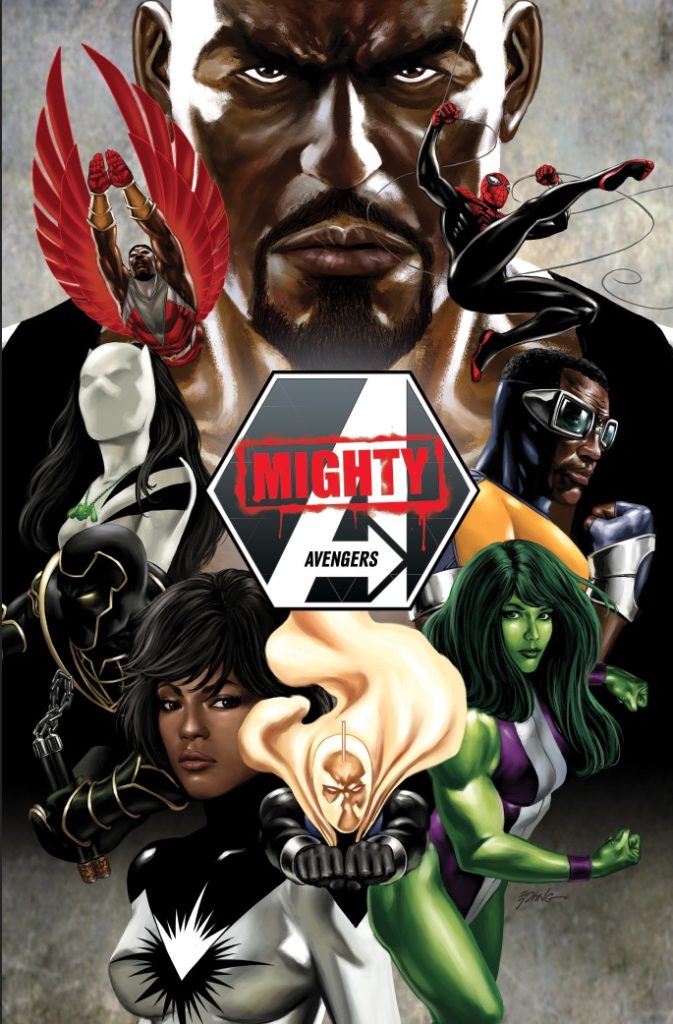
Marvel relaunched Mighty Avengers in 2014 as a majority POC team of Avengers. Art by Steve Epting.

That means all representation is good representation, like Riri Williams as Iron Man, but having a diverse cast is just step one of a truly representative fictional world. Step two is how you treat those characters and who among them gets to be the protagonist.

One of the challenging aspects of being the author to construct those worlds is putting your cast of diverse characters into perilous situations. For a story to be thrilling – especially a story serialized in the long term – we have to believe that characters are truly in danger.

This is part of what makes an auteur like Joss Whedon so compelling (and so maddening): with him, everyone is in danger, all of the time. There is no status quo. Of course, comic books embrace this concept wholeheartedly –  nothing thrills them like making the transgressive choice of killing the seemingly unkillable (only to bring them back to life later). It’s no coincidence Whedon was a comic fan before he was famous (he’s said many times Buffy was based on the template of Kitty Pryde).

(I don’t mean to deify Whedon, as he has his weaknesses from the critical lenses of feminism or queer theory (the two I feel somewhat qualified to speak to), but he is easily the best mainstream male creator to use as an example here – and not just for his visibility. The fact of the matter is, he’s willing to kill popular white guys and let women win. That’s a start.)

Is killing more characters more often the best method of making a story with a diverse cast more thrilling? Not really, because that doesn’t fully recognize the problem of protagonists and plot armor, among other reasons.

The protagonist of a serialized story tends to wear some unavoidable amount of plot armor – a form of extra-fictional protection derived from the fact that we know they will be in the commercial for the next installment. They might be injured or tortured, or even killed in the long run, but they don’t tend to die in random, unhyped episode.

(Many forms of episodic fiction use this to their advantage, setting up a fake set of protagonists to off shockingly early. I can only think of one that legitimately killed main characters left and right at all times: Spooks AKA MI:5 from BBC. Be warned – you are going to be upset when you watch it.)

To make the world around the protagonist seem like it has some amount of stakes, it is the supporting cast who must go without plot armor to be placed in peril. Thus, if the only diversity in your fictional world is in the supporting cast, then your diversity tends to be expendable. If they aren’t, it feels like they are also are wearing “plot armor,” and now your fiction has no consequences.

The unfortunate result of this is that the people who need to see themselves represented more in heroic fiction – people who are black, indigenous, Asian, LGBT, female, disabled, and on – also wind up seeing themselves maimed and killed to make their protagonists feel something and to give their world the illusion of danger.

(The disposal of supporting female characters to make male protagonists feel was deemed “fridging” or “Women in Refrigerators” by then-critic/now-author Gail Simone. At this point, “fridging” is a more generalized term applied to the suffering of any (typically minority) character in order to create a reaction in the (typical male) protagonist.)

There’s a deeper vein being tapped here than simply the expectation that these characters will be endangered. There is also the risk that readers begin to see those grim fates as inextricably tied with their identities. A great example that isn’t tied exclusively to identity is the horror movie trope that the girl who has sex is sure to die. The implication (sometimes intentional, sometimes not) is that sex is sinful and it makes you narratively expendable (or, worse, a target for violence).
YAvgV02 - 0013 promo

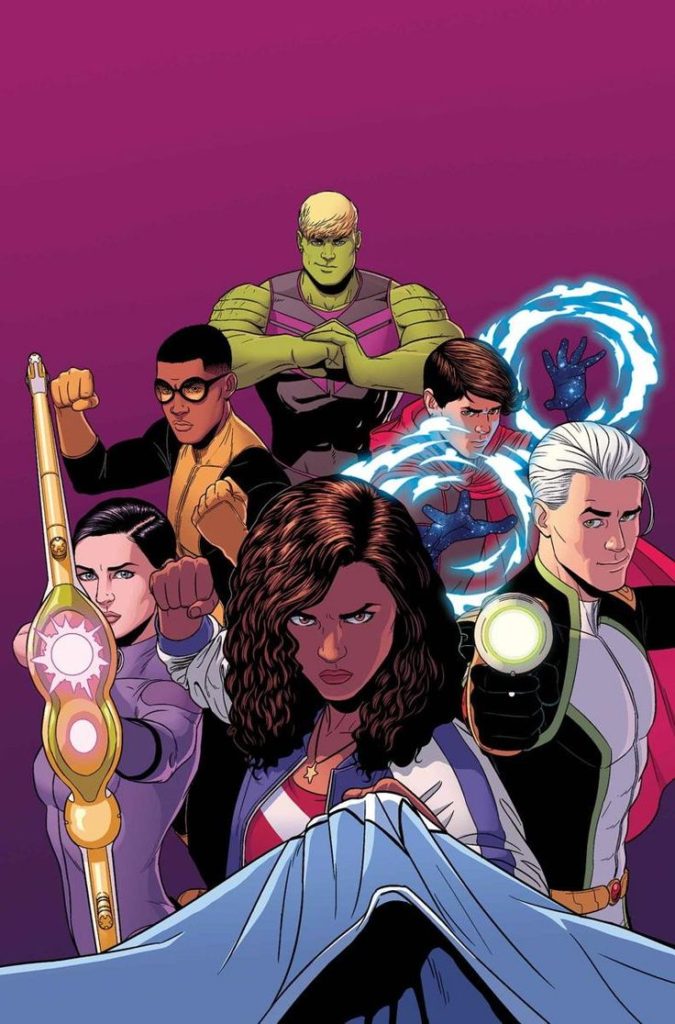
In 2013, Kieron Gillen and Jamie McKelvie launched a Young Avengers team that turned out to be all-minority and ALL QUEER. Wow. Art by McKelvie.

What is the implication when the gay friend or the black friend always dies? When a reader who identifies that way sees themselves being killed again and again in the media they consume, what reality do they begin to cultivate?

Do they believe their life matters?

Author Kieron Gillen recently addressed this in a response to a reader question on Tumblr; here’s an excerpt:

Reader: I (queer myself) understand an issue with such a lack of proper representation/appreciation for queer characters, especially with the recent discussions of queer deaths in media. Yet with WicDiv I see all characters as equally cared for, even in death. Just curious on your thoughts?

KG: There’s certainly been people who’ve found it upsetting and stopped reading the book for it, which we understand entirely. At least part of the reason our story front loads the “All these people are going to die” is that we want to put our cards on the table. … [I]n culture, we are so used to seeing bad things happen to LGBT characters because they are LGBT, that we can read negative intent into stories where bad things happen to them despite that they they are LGBT. I suspect she’s right.

(Like Whedon, Gillen’s approach works within the context of his stories – they’re typically stories about fear and loss where anyone might suffer a terrible fate, and he telegraphs that at the start. Also, not every one of his stories is one of loss – his brilliant Young Avengers is a mainstream book with the most diverse group of characters I’ve read in years and it doesn’t end in misery.)

Just as the solution to making a story thrilling isn’t constantly killing characters, the solution to the issue of increasing positive diverse representation cannot be plot armor for every minority character that walks into the story. That’s both patronizing and predictable. There is no good fiction without risk. To again reference the familiar horror trope, just as it’s no fun (and: awful) to know that the virgin will always live to see the end of the film, you don’t want to think a character is invincible just because she is latina or disabled or bisexual.

The solution to the representation problem isn’t just more representative casts – it’s more diverse protagonists (in addition to the representative supporting cast).

That’s not only because diversifying protagonists puts different people into the most-warranted set of plot armor – that of the star. It also strips the unfortunate association of punishment when we see other representative characters who do suffer or perish, since they are no longer the only representative of a minority (or even no longer the only representative of their specific minority).

In Gillen’s Young Avengers, for a major character to meet a grim fate they would have to be a minority character because the entire team was a minority in one way or another – a woman, a gay male couple, a pansexual male, a bisexual black male, and a gay latina daughter of a same sex couple. In fact, given the final panel, it might have be an all-queer superhero team – a sentence which makes me smile every damn time I write it.

That’s why representation matters. That’s why diversifying the casts of the fiction we consume is not “politically correct” or “diversification for diversity’s sake.” Representation matters because stories matter. We’re each our own protagonist, but many of us don’t see that reflected in the media we consume. When we have a world of comics books, movies, and television shows populated similarly to our actual worlds, then every person will own a key component of cultivating a reality where they matter and they are safe.

And, people exposed to those character who identify differently than themselves will begin to have it reinforced that “The Other” is not an expendable character in their story.

(This was originally going to be the introduction to a review, but it (a) turned into its own piece and (b) would seem to unnecessarily spoiler the outcome of the comic.)

Filed Under: comic books, cultivation theory, essays, Year 16 Tagged With: Buffy, diversity, Jamie McKelvie, Joss Whedon, Kieron Gillen, Representation, The Other, Young Avengers

Marvel introduced a black female Iron Man – is that a good thing? (Yes.)

July 6, 2016 by krisis

Today, Marvel and writer Brian Bendis broke the news via Time Magazine that at the end of the currently-running event “Civil War II” the mantle of Iron Man will be taken over by a 15-year old black MIT student named Riri Williams

(This IIM - 2016 - promois a major shocker, because the vast majority of fans assumed Riri’s introduction in the pages of Invincible Iron Man (visit the guide) – where she was reverse-engineering Tony Stark’s armor – was a set-up for her to take over the mantle of War Machine. Rhodey has become unavailable to carry that title due to the events of Civil War.)

Riri Williams as Iron Man is a very good thing. We do not have enough female heroes or heroes of color, and to see a that in a character who is both as she takes over the mantle of ostensibly Marvel’s most popular single hero outside of Spider-Man is a huge, visible step not only for Marvel comic readers, but for their film fans who this news will surely reach. To have Williams also be a female super-scientist when Marvel generally boasts only a handful is even more wonderful.

(The most prominent female geniuses of Marvel are Kitty Pryde, who is frequently shown to be nearly as genius as Beast; Valeria Richards, whose preternatural intelligence is partially attributed to super powers; the new Moon Girl; and Mockingbird, an oft-forgotten PhD) .

So Riri Williams as Iron Man is a good thing, right?

On the face of it, yes. Inclusion means representation. I love reading books about heroes that are women, and so does my daughter – also a girl of color.

However, there are some aspects of this character choice that have given some fans and critics pause, which I’d like to discuss here – three in particular. I’m very interested in your input. (Edited to add: Here is a post with similar critique from black writer Son of Baldwin, Here is another from black female nerd BlerdGurl.)

1. Minority legacy heroes are only useful until the original makes their return; then their marginalization can be worse than the average minority hero.

“Legacy Heroes” is a term applied to heroes that are the replacement or junior version to their original heroes. They are sometimes used by creators as an opportunity to change the gender or race of the character bearing the main mantle.. The easiest examples to give are from DC comics (Superboy, Batgirl, Wondergirl, etc), because Marvel simply isn’t known for this practice outside the past few years.

Let’s stick with Marvel, for the moment. For a brief time in the 1980s, Tony Stark could not serve as Iron Man and Rhodey Rhodes took over the title. Rhodey is the best possible example of a Legacy Hero – he was a dynamic, well-developed character long before he became Iron Man, and that means that he was able to continue to be featured even when Tony Stark returned.

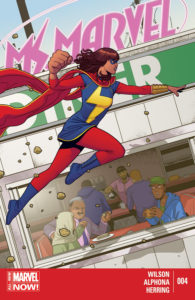
Ms-Marvel - 2014 - 0004As War Machine, he’s lead his own title on many occasions (though they are usually short-lived) and he’s and been a significant character in both comics and now films (though he’s frequently sacrificed as a narrative reason to make Stark feel bad, as has happened twice this year alone).
His time as a Legacy Hero made him more visible, but after being Iron Man he didn’t stay an A-level hero. The white guy bumped him.

Another terrific example is the relatively new Ms. Marvel, the Pakastani-American Kamala Khan (visit the guide). Kamala is a wonderful analog to the original Spider-Man as a new, unsure hero, and Carol Danvers is very unlikely to ever retake her “Ms.” hero mantle now that she is officially Captain Marvel.

Her books sell ridiculous amounts of copies and have been nominated for Eisners. She’s now an Avenger. Things are going well … but we’re only in year two.

There are examples that don’t go as well. At the end of the comics version of the original Civil War, Captain America appears to die, and Bucky takes over the mantle as Cap (visit the guide). His days as Cap are amazing – great, layered storytelling. When Cap came back they shared the mantle for a while before Bucky was spun back to being Winter Soldier, at which point he began to sink back into obscurity – and he’s a white guy who stars in movies.

As with War Machine, he’s now a character Marvel needs to periodically kickstart into a new title or team only to watch him sink again.

Despite those concerns, check out the amazing list of Legacy Heroes Marvel is currently fielding: [Read more…] about Marvel introduced a black female Iron Man – is that a good thing? (Yes.)

Filed Under: comic books, critique, essays Tagged With: Ant-Man, Brian Bendis, Captain Marvel, diversity, Hulk, inclusion, Iron Man, Kitty Pryde, Miles Morales, Moon Girl, Ms. Marvel, Representation, Riri Williams, Spider-Man, The Falcon, Thor, Tony Stark, Wasp, Winter Soldier, Wolverine

Silver Surfer – Definitive Collecting Guide and Reading Order

The Silver Surfer comic books definitive issue-by-issue collecting guide and trade reading order for omnibus, hardcover, and trade paperback collections. Find every issue and appearance! A part of Crushing Comics. Last updated Novemver 2024 with titles scheduled for release through June 2025.

Silver_Surfer_Vol_7_1_Francavilla_Variant_TextlessSilver Surfer has had several ongoing titles over the years collected in a variety of formats. However, there are a few specific formats of books that cover large portions of this title, and I’ll cover those first – Essentials, Epics, Masterworks, and Omnibuses. [Read more…] about Silver Surfer – Definitive Collecting Guide and Reading Order

Marvel Collected Editions Solicits – March, 2017

July 4, 2016 by krisis

Marvel_logoHere’s a holiday surprise for you – another month of Marvel solicitations just arrived on Amazon! These books take us though the Amazon release date of March 28, which means these books will hit the direct market on March 14. I covered the January and February solicits last month.
I’ve broken out the books below. They don’t yet list their contents, so I’ve made a few educated guesses until we can fill in the final contents. If you pre-order with Amazon, please keep in mind that Amazon releases dates are two weeks later that Direct Market release dates.

  • Marvel Masterworks
  • Oversized Hardcover & Omnibus Collections
  • Epic Collections
  • Pre-Premiere TPB Era Material (through 1999)
  • Premiere TPB Era Material Recollections (from 2000)
  • All-New, All-Different Marvel Collections
  • Other Releases

Please note: This post will not be updated with corrected dates, titles, or issue ranges for these titles. For the most up-to-date information, visit the accompanying collection guide pages.

Marvel Masterworks

There’s only one of these books released each month, so this big reveal is a guaranteed feature of each new month of solicits. [Read more…] about Marvel Collected Editions Solicits – March, 2017

Filed Under: comic books Tagged With: Avengers, Chris Claremont, Cloak and Dagger, Collected Editions, Comic Solicits, Daredevil, Deadpool, Elektra, Excalibur, Gene Colan, Guardians of the Galaxy, Inhumans, Jim Valentino, Mark Waid, Marvel Comics, New Mutants, Shang-Chi, Solicits, Star Wars, Steve Gerber

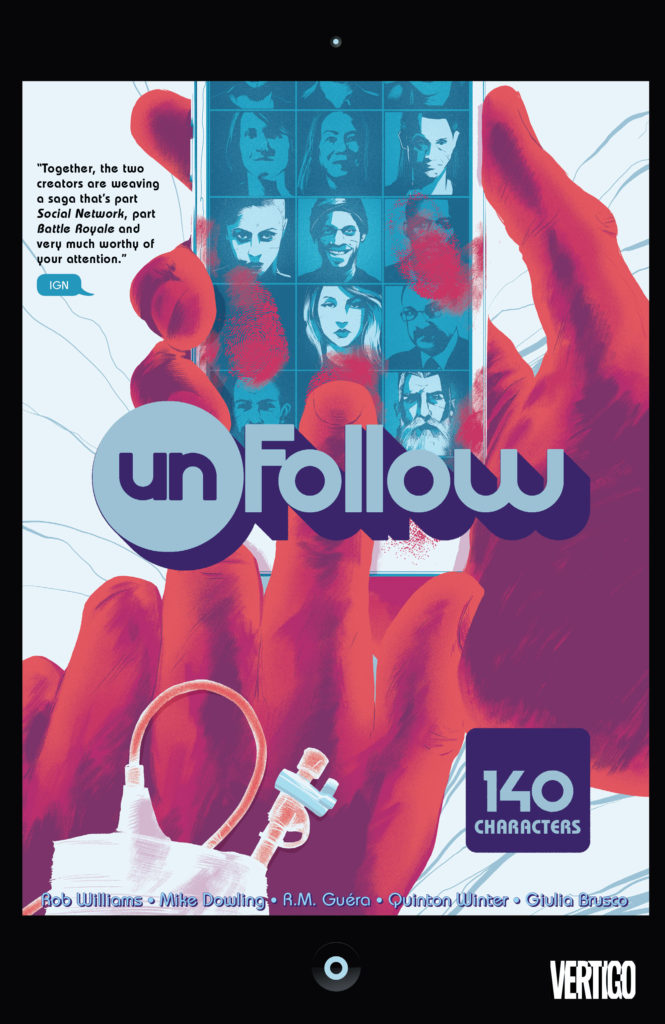
Review: Unfollow, Vol. 1 by Williams & Dowling

July 3, 2016 by krisis

No one can ever own or end a concept.

I think about that a lot in my constant state of creator’s decision paralysis, stemming all the way back to when I first starting writing my novel as an eighth-grader and then that summer a comic with almost the exact same concept came out.

I was young then, and I thought, “Oh no! Now they own that concept! They’ve done it so well that no one can do it again. They ended it.”

I’ve thought that many times about a lot of my creative endeavors. People have owned being a boy/girl duet band, blogging about Philly, the theme of my novel again, and many other things. Heck, it’s no so different in the start-up world, where at RJMetrics we saw dozens of other companies with similar concepts get funded and join the fray.

Here’s the thing – concepts are very rarely a zero sum game. There’s room in a single theme for many different variations.

The case and point for me is an actual zero sum game – the “many people enter, one person leaves” theme in fiction. Highlander might be the best example of this for us children of the 80s. There can be only one! Many film fans thought Battle Royale was such an innovative, transgressive take on it that no one else ought to bother. Then, of course, came Hunger Games. Some people called it a Battle Royale rip-off, while others thought it was such an innovative, transgressive take on it that one one else should bother. I loved a comic called Avengers Arena, which many people called a Battle Royale and Hunger Games rip-off, and by that point I knew better than to think it should prevent anyone else from trying the same thing.

Unfollow-tpb-vol01People keep bothering. There is something elemental about concept of a zero sum game where the sum is both power and life. No one owns zero sum games, or superheroes, or zombie apocalypses, and no single work on any of those is so prohibitive a mic drop that no one else ought to make an attempt.

All that matters is that your story is good – that your creation is compelling.

Unfollow, Vol. 1 – 140 Characters 4.0 stars Amazon Logo

Collects Unfollow #1-6 written by Rob Williams and drawn by Mike Dowling with Pahek and R.M. Guerra, with lettering by Clem Robins and color art by Quinton Weaver and Giula Brusco

Tweet-sized Review: Unfollow: a comic for tweeters who’d love a real-world Hunger Games about wealth’s abundance rather than its lack

CK Says: Buy it.

Unfollow, Vol. 1 contains the first six issues of a maddeningly intriguing comic that breathes fresh life into the concept of a zero sum game where there can be only one winner, which we’ve seen used to such great success in Highlander, Battle Royale, and Hunger Games.

Part of its delightful conceit is that there really can be more than one. Larry Ferrell, a Zuckerbergian figure, is facing imminent death and has decided to dispense his $17 billion fortune between 140 people. Their selection isn’t entirely random nor is it perfectly deliberate, and it is extremely public. Some of them are potential future CEOs and world-altering documentarians, while others are bored rich kids and god-fearing one-man militias.

There’s a catch: for every one of them who dies, the remainder of the 140 get to split that person’s inheritance of $120 million. That’s less than an extra million each, so there’s not a lot of incentive for assassination – unless, of course, you plan to slim down the ranks considerably. [Read more…] about Review: Unfollow, Vol. 1 by Williams & Dowling

Filed Under: comic books, reviews Tagged With: Battle Royale, Giula Brusco, Hunger Games, Mike Dowling, Quinton Weaver, Rob Williams, Unfollow, Vertigo, zero sum game

  • « Go to Previous Page
  • Page 1
  • Interim pages omitted …
  • Page 204
  • Page 205
  • Page 206
  • Page 207
  • Page 208
  • Interim pages omitted …
  • Page 246
  • Go to Next Page »

Primary Sidebar


Support Crushing Krisis on Patreon
Support CK
on Patreon


Follow me on BlueSky Follow me on Twitter Contact me Watch me on Youtube Subscribe to the CK RSS Feed

About CK

About Crushing Krisis
About My Music
About Your Author
Blog Archive
Comics Blogs Only
Contact Krisis
Terms & Conditions

Crushing Comics

Marvel Comics

Marvel Events Guide

Spider-Man Guide

DC Comics

  • Marvel Omnibus Announcement Recap on Near Mint Condition – January to June 2027
    Today I’m back on Near Mint Condition for a […]
  • Animal Man by Jamie Delano and Steve Pugh OmnibusDC Omnibus Announcement: Animal Man by Jamie Delano and Steve Pugh Omnibus
    We're getting the THIRD sequential book in the omnibus line of Animal Man's Vertigo Years with the Animal Man by Jamie Delano and Steve Pugh Omnibus. […]
  • DC Finest Batgirl: Silent KnightDC Comics Announcement: DC Finest Batgirl – Silent Knight
    Cassandra Cain is one of the most-popular characters at DC Comics, and in 2027 DC Finest Batgirl: Silent Knight will collect her full origins. […]
  • DC Finest Romance - Escape From LonelinessDC Comics Announcement: DC Finest Romance – Escape From Loneliness
    The first 2027 announcement is a new line that just missed the on-air results of the Most-Wanted Poll: DC Finest Romance - Escape From Loneliness […]
  • Patrons-Only: Crushing Comics Club Aftershow – Ranking Every X-Men Writer with OneWheelChair X Hangout and Q&A
    After each of my live streams I keep on streaming for […]
  • Ranking Every X-Men Writer with OneWheelChair X!
    BECAUSE YOU DEMANDED IT with your views, likes, and comments, I'm ranking EVERY X-Men writer, ever with guest OneWheelchairX! […]
  • DC Omnibus Announcement: Batgirl – Cassandra Cain Omnibus Vol. 1
    This is the week that the DC Catalog for January to […]
  • Marvel Omnibus Announcements Summary, January to June 2027
    Over the past two months, Near Mint Condition has […]
  • Marvel Omnibus Announcement – Punisher: Enter the War Zone Omnibus AKA Punisher by Greg Rucka!
    Near Mint Condition announced the final Marvel omnibus […]
  • Marvel Omnibus Announcement: Wolverine The Return of Weapon X Omnibus AKA Wolverine Omnibus Vol. 8
    Near Mint Condition announced another one of the final […]
  • How to Collect Spider-Man in Omnibus – The Video Collecting Guide (updated through June 2027)
    In January, I joined Omar on Near Mint Condition to […]
  • Patrons-Only: Crushing Comics Club Aftershow – Haul Around the World Prelude to FOMO Hangout and Q&A
    After each of my live streams I keep on streaming for […]
  • Haul Around The World: Prelude to FOMO Haul – EVERY New Epic & DC Finest, X-Men, Compendiums, & More
    I hauled around the world and I, I, I, I… I am […]
  • DC Finest Western - Requiem for a Gunfighter, starring Jonah Hex and ScalphunterDC Finest Announcement: DC Finest Western – Requiem for a Gunfighter
    DC Comics has announced DC Finest: Western - Requiem for a Gunfighter, a book full of Bronze Age Jonah Hex & Western comics. Learn more! […]

Content Copyright ©2000-2023 Krisis Productions

Crushing Krisis participates in affiliate programs including (but not limited to): Amazon Services LLC Associates Program (in the US, UK, Canada, France, Germany, Italy, and Spain), eBay Partner Network, and iTunes Affiliate Program. If you make a qualifying purchase through an affiliate link I may receive a commission.